
Developers and IPPs
Yield that holds for twenty-five years.
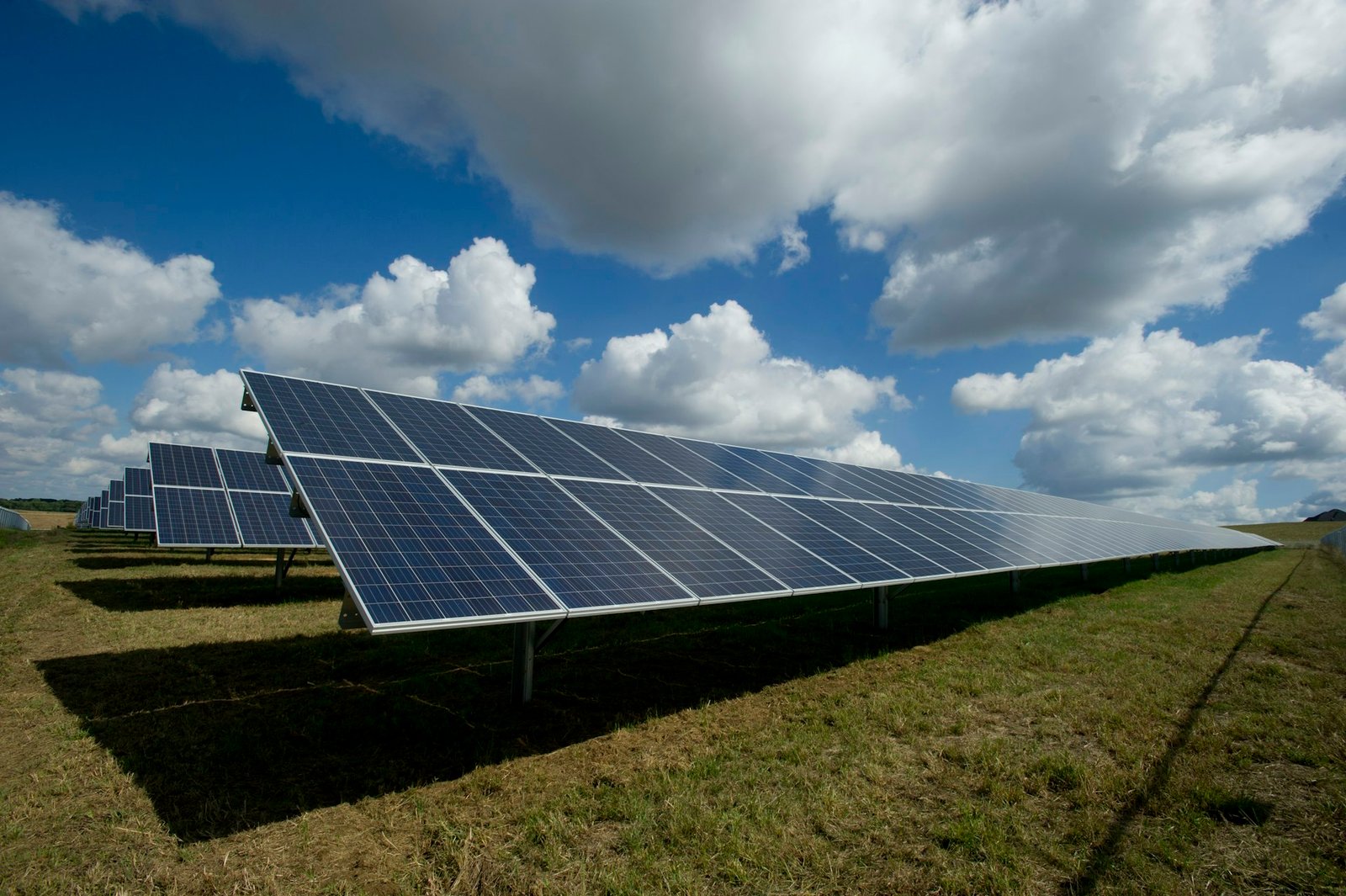
For ground-mounted plants that feed the grid, engineering discipline decides the yield across the life of the asset. We deliver design, procurement and construction against the standards a utility project demands.
1 MW and aboveTypical project
- 87.4 %
- Output guaranteed at year 30
- 0.40 %
- Annual degradation
- 5400 Pa
- Snow load rating
What you get
Built for this kind of site.
- Turnkey EPC for ground-mounted plant
- N-type cells avoid light induced degradation in year one
- 30-year linear power guarantee down to 87.4 percent
- Bifacial gain on reflective ground raises specific yield
- Serial register supports asset-level traceability
Utility projects are delivered as EPC scopes, from site and yield assessment through construction, commissioning and handover. A 1 MW block is roughly 1,710 modules.
How a project runs
From first visit to handover.
- 01
Site and yield assessment
Irradiance data, terrain, grid proximity and a first-pass energy model.
- 02
Detailed design
Array layout, tracker or fixed tilt, string sizing and interconnection design.
- 03
Construction
Civils, mounting, module installation, cabling and substation works.
- 04
Commissioning and O&M
Performance testing at handover, then long-term operations and reporting.
Worth knowing
Questions we get asked.
- Why N-type for utility scale?
- N-type cells have no light induced degradation, so the plant does not lose output in its first weeks, and the temperature coefficient is lower over the asset life.
- How much does bifacial add?
- The datasheet quotes 648 W at a 13.5 percent irradiance ratio. Real gain depends on ground reflectivity and mounting height.
- What degradation should I model?
- One percent in the first year, then 0.40 percent a year, reaching 87.4 percent of nameplate at year 30.
Tell us about your site.
Send your location, your load and what you want to run. We will size a system and come back with a written quote.
Discuss a utility project